
While Hyundai Motor India reported a marginal growth, Toyota Kirloskar Motor witnessed a dip in sales last month.

For Mahindra & Mahindra (M&M), which has just started executing a comeback strategy for wresting back ground it lost to rivals, this could not have come at a worse time. The maker of the Bolero Neo and the Thar models on Thursday said it would have to halt production at its automotive plant for a week due to the worsening supply situation of semiconductors.
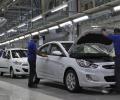
Automakers Maruti Suzuki, Tata Motors, Mahindra & Mahindra and Kia reported robust growth in their vehicle dispatches in the domestic market for August buoyed by festive demand and easing of semiconductor shortage woes. Other manufacturers like Hyundai, Toyota and Skoda also reported growth in wholesales in August as compared with the same month last year. The country's largest automaker Maruti Suzuki India said its domestic passenger vehicle dispatches increased by 30 per cent to 134,166 units in August as compared with 103,187 units in the year-ago month.

Hyundai i20 Active would feature almost the same specs as Elite i20 hatch.

The company said its domestic sales rose by 31.1 per cent during the month to 1,00,964 units as against 77,002 units in June 2013.

Hyundai Grand i10 is the fastest growing car in India, says the company.
Leading carmakers Maruti Suzuki, Hyundai and Tata Motors reported robust dispatches to dealers in May on the back of strong demand for passenger vehicles across regions, even as the global semiconductor shortage continued to impact production. Mahindra & Mahindra, Kia India, Toyota Kirloskar Motor, Honda Cars and Skoda also witnessed strong demand for their models last month. The month of May also witnessed Tata Motors race ahead of Hyundai in terms of domestic wholesales.
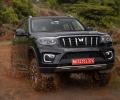
'The decrease in the popularity of white cars and the rise in preference for darker colours like black, grey, and blue over the past three years reflect changing consumer attitudes.'

...But sales of domestic passenger vehicles dropped 2% to 3% year-on-year in August owing to low demand.

Union Minister Nitin Gadkari on Tuesday launched the country's first crash testing programme Bharat NCAP aimed at improving road safety standards of motor vehicles up to 3.5 tonnes. Bharat New Car Assessment Programme (Bharat NCAP) is India's own crash testing programme and is cheaper than tests conducted abroad, Gadkari said, adding that the star ratings will help buyers understand the quality of the product and make an informed purchase decision. Bharat NCAP will be implemented from October 1, 2023.

Domestic passenger vehicle dispatches witnessed a 13 per cent year-on-year rise in April as demand remained robust across segments, industry body Siam said on Friday. The total passenger vehicle dispatches from companies to dealers rose to 331,278 units last month compared to 293,303 units in April 2022. Market leader Maruti Suzuki India dispatched 137,320 units to dealers last month against 121,995 units in April last year.

Hyundai Motor India will raise prices of its entire product portfolio in the range of Rs 5,000 to Rs 25,000 from Jan 2015.
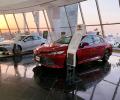
The growth momentum that started during the festival season is likely to sustain in the new year, reports Arindam Majumder.

Industry leaders on Thursday mourned the death of Ratan Tata saying with his demise India has lost a visionary who shaped its industrial and philanthropic landscape. Tata was a truly remarkable business leader who placed the country before business interests, and whose vision was truly transformational for a country and its people, TVS Motor Co Chairman Emeritus Venu Srinivasan said in a statement. "Mr Tata was a truly remarkable business leader, the likes of whom nations get only once in a century," he added.

Leading automakers Maruti Suzuki, Hyundai and Tata Motors on Thursday reported robust sales in March as a shift towards personal mobility and pent up demand continued to help companies push dispatches to their respective retail partners. Toyota Kirloskar Motor, Honda Cars and Mahindra and Mahindra (M&M) also reported strong sales last month as compared to the year-ago period, when dispatches were adversely impacted due to the impending transition to BSVI from April 2020 and the nationwide lockdown to contain the coronavirus pandemic. The country's largest carmaker Maruti Suzuki India said its domestic sales stood at 1,49,518 units last month. The auto major had reported sales of 76,976 units in March 2020.
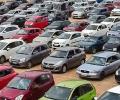
Leading automakers Maruti Suzuki India, Hyundai Motor, Kia Motors and Tata Motors reported sales growth in the domestic market in November, aided by robust offtakes amid the festival season. While Maruti Suzuki India reported marginal growth, Hyundai logged in its highest ever monthly sales in November. Others like Honda Cars India, Toyota Kirloskar Motor, Mahindra & Mahindra and MG Motor India also reported sales growth in November as compared with the same month last year.
The meltdown in Dalal Street that wiped out investor wealth to the tune of 44 trillion in 2025 also seems to be having a ripple effect on the country's vibrant automobile retail sales.
Hyundai Motor India Ltd on Wednesday launched a new automatic variant of its diesel powered luxury sedan Sonata Embera CRDi, priced at Rs 15,71,656 (ex-showroom Delhi).
BS-VI emission norms and the COVID-19 lockdown impacted the dispatches.

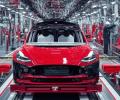
If Tesla comes in, India's position as a manufacturing hub will rise many notches, as it will become only the second country, after China, to have both Apple as well as Tesla.

The previous May peak was observed in 2018 when the domestic PV wholesales stood at 301,238 units.
While Maruti recorded negative sales, Hyundai gained marginally.

Maruti Suzuki India said its domestic sales rose 10.6 per cent in May.
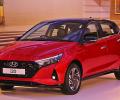
The latest Hyundai i20 is an exciting car, given the overall drive experience, transmission, ride quality and tech. And while it may not be as low cost as a Maruti or come with the "heavy German steel-feel" of the Volkswagen, it does carve out a niche for itself at pole position with a combination of technology, styling, drive and ride comfort, and low cost of ownership, says Pavan Lall.

After years of giving free passes to counterparts from Korea, Japan, US in the Indian auto market, Chinese automakers had planned a major push to grab the fifth largest car market in the world. But the shutdown of factories and logistics hubs in the country following the outbreak of coronavirus is slowly constricting the business of Chinese auto majors which have recently entered India.

White is easy to maintain, looks brighter than other colours over a longer period, is the least commonly rejected colour among family members, has high resale value, provides better safety at night, absorbs less heat in the summer season, makes small cars look bigger, and is not considered inauspicious.

The country's largest carmaker Maruti Suzuki India (MSI) on Monday reported a 11.8 per cent increase in wholesales to 164,469 units in February. The company had sold 147,110 units in February last year, Maruti Suzuki India (MSI) said in a statement. Domestic sales increased 11.8 per cent to 1,52,983 units last month, as against 1,36,849 units in February 2020, it added.
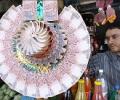
Top corporates and banks, including Bharti Airtel, Maruti Suzuki, SAIL and SBI, have paid lower advance taxes during the July-September quarter reflecting the impact of slowdown.

Auto majors, including Maruti Suzuki India, Hyundai and Tata Motors, on Sunday reported high double-digit growth in their domestic passenger vehicle sales in July riding on stabilisation of macro-economic factors and better consumer sentiments. Similarly, Honda, Nissan, MG Motor and Skoda also reported healthy growth in their sales last month leveraging on improved market mood amid prevailing lower coronavirus infection rate, despite supply constraints of semi-conductors. The country's largest carmaker Maruti Suzuki India's (MSI) domestic sales increased by 39 per cent to 1,41,238 units last month as against 1,01,307 units in July 2020, the company said in a statement.
The new obsession on cost control is powered by the company's 'GEAR' (Generate idea, evaluate, action and realise the idea) programme.
Automakers in India posted their worst growth in recent times in May 2011.

Corporate India is starting to step up its capital expenditure plans amid government incentives and signs of rising demand, company executives and analysts have indicated. This coincides with the Reserve Bank of India (RBI) recently citing a double-digit growth in private capital expenditure. Healthy balance sheets of banks and corporates, along with increasing capacity utilisation and improving business sentiment, are contributing to a favourable environment for sustained growth in private sector investments, the RBI said in its policy last week.
A majority of HMIL's current export comprises the i10 model, which is exported to Asia, Latin America and Western Europe. In addition, the company has stated that 90 per cent of the i20 model (a premium hatchback) will be exported. The company will produce 150,000 units of the model annually.
Tamil Nadu, claiming to be the Detroit of India, has labour unrest in the automobile industry, among others.

buyer. Car companies on Monday reported double-digit increases in sales in April 2010 over April 2009.
Hyundai Motors India hopes to export over 250,000 cars next year from India, twice this year's number. Yet, Managing Director H S Lheem said this performance will not be without its problems. In fact, ebullient exports may end up denting the company's bottom line.

Various corporate houses and banks including TVS Motors, India Cements, Hyundai Motor India Limited and State Bank of India on Tuesday contributed a total of Rs 22 crore.

Although most companies had geared for increased production at their plants, most say the surge in demand was unexpected, partly driven by yesteryear purchases which had been postponed earlier due to lack of funds.

Passenger vehicle wholesales in India increased by 12.73 per cent to 285,367 units in November as against 253,139 units in the same month last year riding on the back of festive demand, auto industry body SIAM said on Friday. According to the latest data by the Society of Indian Automobile Manufacturers (SIAM), two-wheeler sales rose 13.43 per cent to 16,00,379 units, compared with 14,10,939 units in the same month last year.

Chinese electric carmaker BYD is focusing on launching vehicles in the Rs 25-45 lakh price range in India even as it continues to evaluate customer preferences and demand in more affordable segments, its Head of Electric Passenger Vehicles in India Rajeev Chauhan told Business Standard.
